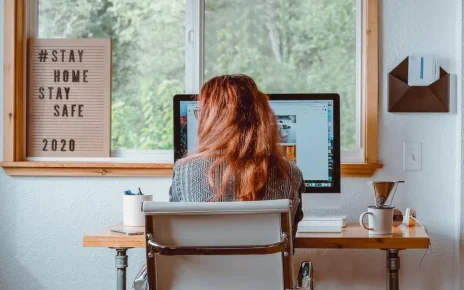
Let’s be honest. The shift to remote work was a game-changer for flexibility, but our bodies? Well, they’re paying a hidden tax. That nagging ache between your shoulders, the stiff lower back after a marathon Zoom session, the wrist that twinges after a day of typing—these aren’t just minor annoyances. They’re signals. And if we ignore them, they become chronic issues that steal our comfort and productivity.
Here’s the deal: our bodies are built for movement, not for eight-hour stints in a dining chair that was never meant to be an office throne. Optimizing musculoskeletal health isn’t about radical overhauls. It’s about weaving smart, sustainable habits into the fabric of our sedentary days. Let’s dive in.
The Sedentary Trap: Why Sitting is the New Smoking for Your Muscles and Joints
You’ve probably heard the phrase. It sounds dramatic, but the mechanics are straightforward. When you sit for prolonged periods, your hip flexors shorten and tighten, your glute muscles essentially “fall asleep,” and your core stabilizers switch off. This creates a cascade of compensation.
Your lower back takes on the burden your core should handle. Your neck and shoulders hunch forward, straining under the weight of your head. Honestly, it’s like expecting one weak link in a chain to hold up a heavy gate—eventually, something gives. This postural stress is the root cause of most remote work discomfort.
Key Pain Points in the Remote Workscape
Certain areas bear the brunt. Recognizing them is the first step to fixing them:
- The Neck and Shoulders (Tech Neck): That forward head posture, peering at a screen, can add up to 60 pounds of force on your cervical spine. Ouch.
- The Lower Back: Without proper lumbar support, the discs in your lower spine are compressed unevenly. Slouching turns your spine from a spring into a crumpled column.
- The Wrists and Hands (Hello, Carpal Tunnel): Improper keyboard and mouse alignment is a fast track to repetitive strain injuries.
- The Hips and Legs: Tight hips, poor circulation, that “pins and needles” feeling—all classic signs of a body begging to move.
Your Action Plan: Beyond the Ergonomic Chair
Sure, a good chair and monitor stand are foundational. But they’re passive solutions. Real optimization is active. It’s about creating a dynamic relationship with your workspace.
1. Micro-Movements: The Magic of the “Movement Snack”
Forget the idea that you need a 1-hour gym session to counteract sitting. The research is clear: frequent, tiny breaks are more effective. Set a timer for every 25-30 minutes. When it goes off, do something for 60 seconds.
- Stand up and stretch your arms to the ceiling.
- Do five slow, deep squats.
- Gently roll your shoulders back ten times.
- Look away from your screen and focus on something far away.
2. Postural Reset Drills (Do Them Now)
These are your quick-fire resets. Weave them into your day, maybe before a coffee refill or after sending an email.
| Drill | How-To | Target Area |
| Chin Tuck | Sit tall, gently draw chin straight back, creating a “double chin.” Hold 5 sec. Repeat 10x. | Neck & Upper Back |
| Thoracic Extension | Clasp hands behind head, elbows wide. Gently arch upper back over chair. Breathe. | Mid-Back (Thoracic Spine) |
| Seated Figure-Four | Cross one ankle over opposite knee. Keep spine straight and lean forward slightly. | Hips & Glutes |
3. The Non-Negotiable Daily Mobility Session
Think of this as brushing your teeth for your joints. Just 10-15 minutes in the morning or evening can work wonders. Focus on fluid movements, not static, painful stretching. Cat-Cows, leg swings, gentle torso twists—the goal is to lubricate the joints and remind your muscles of their full range of motion. It’s like oiling a stiff hinge.
Building a Resilient Body: Strength is Your Armor
Mobility is about movement. Strength is about support. You don’t need a garage full of weights. Bodyweight is a powerful tool. Aim for two short sessions a week targeting the “anti-sedentary” muscle groups:
- Glutes and Hamstrings: Bridges, hip thrusts, bodyweight deadlifts. They counter tight hip flexors.
- Upper Back (Rear Delts/Rhomboids): Band pull-aparts, face pulls. They fight the inward shoulder roll.
- Core (Especially the Deep Core): Planks, dead bugs, bird-dogs. They’re your body’s natural weight belt.
In fact, a strong core and back are your best defense against lower back pain from sitting all day. It’s that simple.
The Holistic Habit Stack
Musculoskeletal health isn’t just about muscles and bones. It’s a system. A few other levers to pull:
- Hydration: Your spinal discs are mostly water. Dehydrate, and they become less plush, more brittle. Sip water consistently.
- Walking: This is the ultimate human movement. A 20-minute walk not only boosts circulation but also allows your spine to decompress and move in a natural, rhythmic way.
- Stress Management: Chronic stress makes us clench. Jaw, shoulders, hands. Mindfulness or even just conscious belly breathing can soften that held tension you didn’t even know you had.
Look, perfection is impossible. Some days you’ll be in flow and forget every timer. That’s okay. The goal is consistency, not perfection. Start with one thing. Maybe it’s the 25-minute movement snack timer. Or a 5-minute mobility flow when you wake up.
Your workspace might be static, but your approach to health within it doesn’t have to be. By listening to those small signals—and acting on them with small, consistent movements—you build a body that’s resilient, not just one that endures. The power to feel better, honestly, is already in your hands. Or rather, in your next decision to stand up and stretch.